
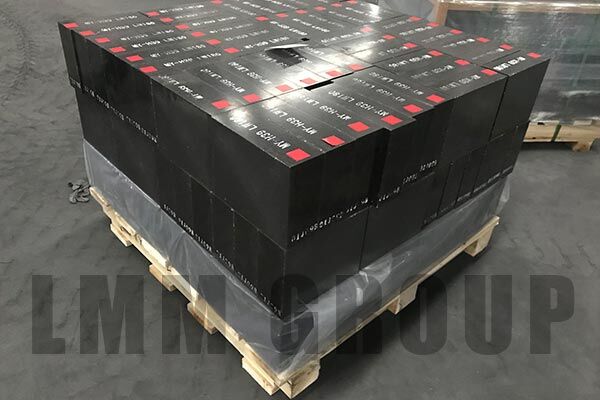
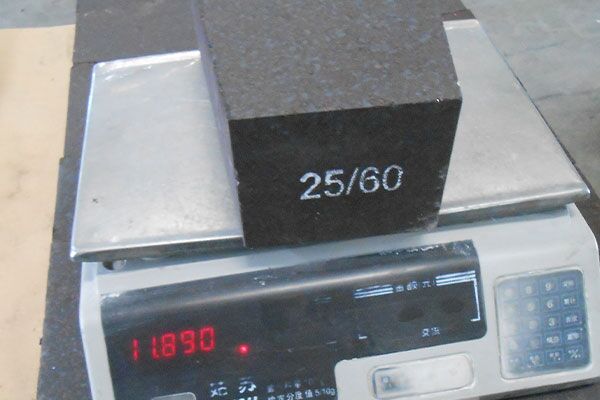
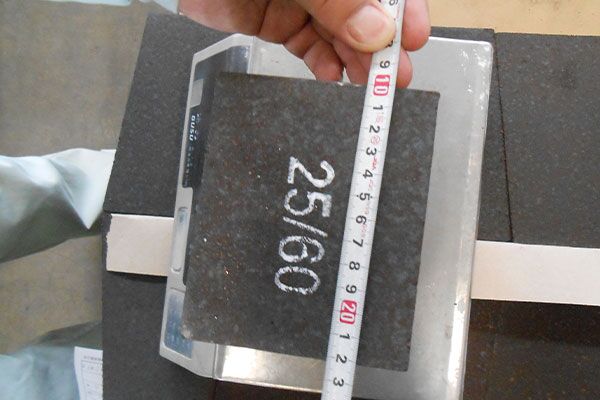
Magnesia carbon bricks are made of high melting point alkaline oxide magnesium oxide (melting point 2800°C) and high melting point carbon materials that are difficult to be wetted by slag as raw materials, with various non-oxide additives added. Non-burning carbon composite refractory material combined with carbon binder.
Magnesia carbon bricks are mainly used for the lining of converters, AC electric arc furnaces, DC electric arc furnaces, and the slag lines of ladles.
Its main features are: good high temperature resistance, strong slag resistance, good thermal shock resistance, and low high temperature creep.

Application: EAF/BOF/LF
| Grade | MgO | C | B.D. | A.P. | CCS |
| % | % | g/cm³ | % | Mpa | |
| MTB-6A | 85 | 7 | 3.10 | 4.00 | 48 |
| MTB-10A | 81 | 11 | 3.08 | 3.00 | 45 |
| MTB-14A | 77 | 15 | 3.00 | 2.00 | 42 |
| MT-10A | 81 | 11 | 3.08 | 3.00 | 45 |
| MT-12A | 79 | 13 | 3.03 | 3.00 | 42 |
| MT-14A | 77 | 15 | 3.00 | 2.00 | 42 |
| MT-16A | 75 | 17 | 2.95 | 2.00 | 38 |
Application: Ladle furnace
| MgO | Al203 | C | B.D. | A.P. | CCS | |
| % | % | % | g/cm³ | % | Mpa | |
| AMT-60 | 16 | 57 | 12 | 2.92 | 4.00 | 50 |
| AMT-80 | 17 | 62 | 10 | 2.95 | 4.00 | 50 |
Application: BOF/LF/VOD/GOR
| Grade | Mg0 | CaO | AI203 | Fe203 | Si02 | B.D. | A.P. | C.C.S | R.U.L | Paraffin Dip |
| % | % | % | % | % | g/cm³ | % | Mpa | ℃ | Wax | |
| MG-20A | 75.74 | 21.41 | 0.41 | 1.27 | 0.86 | 3.07 | 8.2 | 110 | 1700 | N |
| MG-20B | 73.31 | 22.35 | 0.41 | 1.13 | 0.75 | 2.98 | 11.6 | 94 | 1700 | N |
| MG-30A | 64.14 | 31.89 | 0.46 | 1.04 | 0.86 | 3.1 | 8.7 | 66 | 1700 | N |
| MG-30B | 57.35 | 40.03 | 0.53 | 0.97 | 0.82 | 3.01 | 12.1 | 85 | 1700 | N |
“LMMGROUP“
Definition, specifications, selection, application, quality inspection and export terms of magnesia carbon refractory bricks.
Q1. What is a magnesia carbon brick?
A1. A magnesia carbon (MgO‑C) brick is an unfired carbon‑bonded refractory made from high‑melting‑point magnesia (MgO, melting point 2,800 °C) and flake graphite (typically 5–20% carbon), plus non‑oxide antioxidants (Al, Si, or SiC) and a resin binder. The magnesia provides slag‑corrosion resistance against basic slags, while the graphite provides non‑wettability, high thermal conductivity, and low expansion — giving MgO‑C bricks 3–5× the slag‑line life of conventional magnesia bricks and far better thermal‑shock (spalling) resistance.
Q2. What are the standard technical specifications of magnesia carbon bricks?
A2. Typical ranges across common grades (MT‑10A, MT‑14A, MT‑18A etc.): MgO content 70–97%, carbon content 5–20%, bulk density 2.85–3.15 g/cm³, apparent porosity ≤3–6%, cold crushing strength ≥35–50 MPa, and hot modulus of rupture at 1400 °C ≥6–12 MPa. Service temperature reaches 1,800 °C. Standard testing follows GB/T 16555, GB/T 2997, and GB/T 5072 (or equivalent ISO methods). MgO‑C bricks are carbon‑containing products, so they have no load‑bearing softening‑temperature test item.
Q3. How do I choose the right carbon content for my furnace?
A3. Match carbon content to the working zone: converter barrel/body linings use 8–14% C; ladle and converter slag lines use 14–20% C for maximum slag resistance; EAF hot spots balance thermal shock and erosion with 10–18% C. Higher carbon improves thermal‑shock resistance and slag penetration resistance but increases oxidation sensitivity and reduces high‑temperature strength — above ~20% C the oxidation risk outweighs the benefit in strongly oxidizing atmospheres. For specific zones: furnace mouth and trunnion areas need good oxidation resistance; charging side needs high‑temperature strength and thermal shock resistance; hearth bottom can use standard grades.
Q4. What is the difference between magnesia carbon bricks, magnesia chrome bricks, and aluminum carbon bricks?
A4. MgO‑C bricks: magnesia + graphite, strongest resistance to basic (high‑basicity) slags, best overall choice for converter/EAF linings and ladle slag lines in steelmaking. Magnesia‑chrome bricks: older technology, good corrosion resistance but contains Cr (hexavalent‑Cr environmental risk in service and disposal), largely replaced by MgO‑C in ladle slag lines. Alumina‑carbon (Al‑C) bricks: bauxite/corundum + graphite, better for acidic slags and continuous casting applications (submerged entry nozzles, sliding plates); alumina‑magnesia‑carbon (AlMgC) is common for ladle walls. For high‑basicity slag environments, MgO‑C is almost always preferred.
Q5. Where are magnesia carbon bricks used in a steel plant?
A5. Main applications: BOF converter linings (barrel, slag line, trunnion, tap hole areas), AC and DC electric arc furnace linings (hot spots, banks, slag line), LF/VD/RH refining ladle slag lines and bottoms, and out‑of‑furnace refining units. By damage zone: converter slag line and trunnion see the most severe slag attack; EAF hot spots face arc radiation plus slag; ladle slag lines combine long slag contact time with thermal cycling. Zone‑specific grades (zoned lining design) are standard practice — one plant extended converter campaign life from 3,200 to 7,800 heats using zoned MgO‑C grades with slag‑splashing practice.
Q6. How can I judge the quality of magnesia carbon bricks before ordering?
A6. Three checks: (1) Fracture surface — a quality brick shows a dense, uniform texture with flake graphite evenly distributed; (2) Density — bulk density should be ≥2.95 g/cm³ for standard grades (up to 3.10+ for low‑carbon grades); (3) Immersion test — a sample held in 1,600 °C molten steel for 30 minutes should show corrosion depth ≤3 mm. Always require full third‑party test reports covering MgO purity, carbon content, porosity, cold crushing strength, and hot modulus of rupture at 1400 °C, and verify the magnesia grade (fused magnesia ≥95% MgO for premium products, 97‑grade for demanding applications).
Q7. Why do magnesia carbon bricks crack or spall, and how can it be prevented?
A7. Two root causes: thermal stress (over‑fast heatup) and graphite oxidation. Prevention: control the drying/heating curve — heat up at ≤100 °C/h, with slow ramping through the 600–800 °C band where the binder volatilizes, so the structure does not loosen. Select grades with composite antioxidants (metallic Al/Si, SiC, or B4C) for oxidizing atmospheres and for zones exposed to air (trunnion, furnace mouth). Fine hairline cracks ≤2 mm on the working face during service are normal. For storage: keep bricks dry (≤70% RH, 5–35 °C), wrapped in moisture‑proof film; shelf life is typically 12 months.
Q8. What antioxidants are used in magnesia carbon bricks and why do they matter?
A8. Common antioxidants: metallic aluminium powder, metallic silicon, SiC, and B4C, added at 1–5% depending on service conditions. They work by preferentially reacting with infiltrated oxygen and forming dense reaction layers (spinels, carbides) that block pore channels and slow carbon burnout. In strongly oxidizing atmospheres (converter blowing, EAF oxygen lancing, bottom‑blowing with CO2/O2), the antioxidant package is the single biggest determinant of service life after carbon content and magnesia purity. Suppliers should state antioxidant type and addition level in the datasheet — brands that omit this information are a procurement red flag.


